Building High-Performing Sales Teams: CRM Strategy Beyond the Software
Discover how strategic CRM implementation and organizational alignment drive enterprise sales excellence.
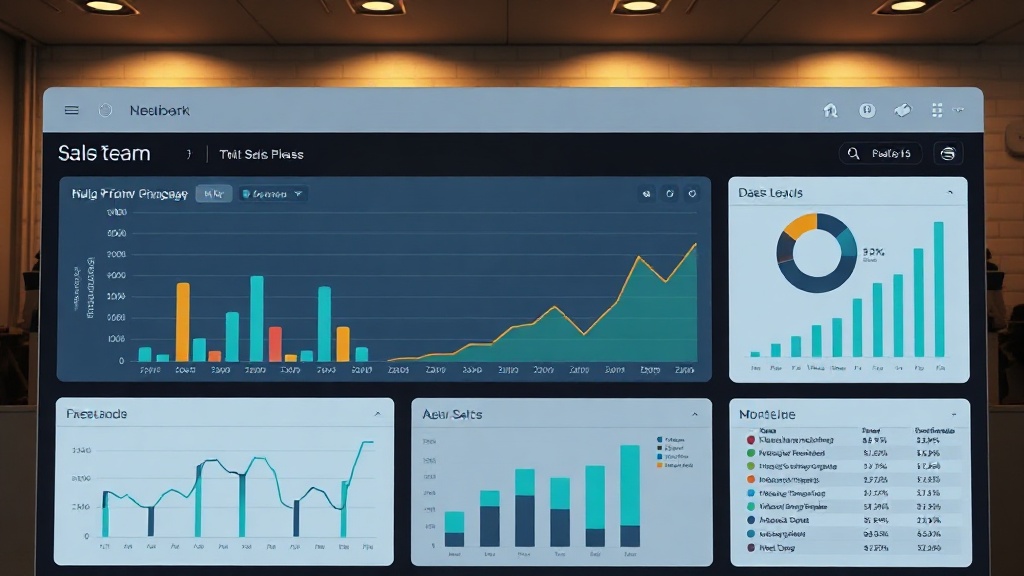
A CRM is just software. A high-performing sales organization is a strategic system. At Grupo Cidelo, we’ve seen organizations invest millions in CRM platforms only to see adoption plateau at 40% and ROI disappear into data silos.
Beyond The Software
CRM success requires three aligned components:
1. Process Excellence
Your CRM should automate your process, not constrain it. Before implementing:
- Map your sales cycle (prospect → opportunity → close)
- Define stage criteria (when does an opportunity advance?)
- Identify decision gates (what triggers escalation or disqualification?)
- Specify metrics (what do we measure at each stage?)
Example CRM Stage Progression:
- Prospect: High-intent inbound lead
- Qualified: Needs analysis completed, budget confirmed
- Proposal: Custom proposal presented, ROI demonstrated
- Negotiation: Commercial discussions initiated
- Close: Contract approved
2. Sales Discipline & Adoption
Technology adoption requires cultural commitment:
- Daily usage: CRM is your single source of truth—all activity logged
- Data hygiene: Each record complete, current, and accurate
- Forecasting reliability: Sales leaders can confidently predict close rates based on pipeline data
- Coaching framework: Managers use CRM data to coach reps toward performance
Critical: Sales reps resist CRM when they see it as admin burden rather than sales tool.
3. Analytics & Continuous Improvement
CRM data only matters if you act on it:
- Pipeline health: Is your funnel converting at expected rates?
- Cycle time: Are opportunities moving through stages efficiently?
- Velocity: Is win rate by deal size where it should be?
- Rep performance: Where are outliers—top performers and those needing support?
The High-Performing Sales Org
These characteristics separate top quartile organizations:
1. Predictable Pipeline
- Each rep consistently carries 3x annual quota in pipeline
- Stage-to-stage conversion rates are known and stable
- Sales leaders forecast with 90%+ accuracy
2. Efficient Sales Motion
- Average deal cycles are 30% faster than industry average
- Cost of customer acquisition is 40% lower
- Customer retention improves because right buyers were qualified from start
3. Scalable Process
- New reps reach 50% quota in 3 months, 100% in 6 months
- Sales operations is 5-10% of total salesforce (vs. 15-20% at most firms)
4. Data-Driven Decision Making
- Hiring decisions based on pipeline contribution, not activity
- Territory assignments optimized for revenue potential
- Compensation aligned with results, not effort
Common CRM Implementation Mistakes
Mistake 1: Copy & Paste From Another Company Your process is your competitive advantage. Customize your CRM to your process, not vice versa.
Mistake 2: Treat It as IT Project CRM is a sales transformation. Sales leadership must drive decisions, not IT.
Mistake 3: Insufficient Change Management Expect 3-6 months of adoption friction. Budget accordingly and support users actively.
Mistake 4: Neglect Data Quality Garbage in = garbage out. Invest in data governance from day one.
Implementation Roadmap
Month 1-2: Process mapping, software selection, admin setup Month 3-4: Pilot with top performers, refine based on feedback Month 5-6: Full rollout, intensive coaching, dashboard implementation Month 7-12: Optimization, analytics, continuous improvement
The Result
Organizations that execute disciplined CRM strategy see:
- 25-40% improvement in sales cycle efficiency
- 20-30% improvement in win rate
- 15-25% improvement in deal size
- 40-60% improvement in forecast accuracy
Your CRM software is just the starting point. Strategic alignment, process discipline, and leadership commitment drive results.
Let’s build a high-performing sales organization for your enterprise.
About This Article
This article is part of Grupo Cidelo's enterprise consulting insights series. We help organizations navigate complex transformations across business automation, enterprise sales, cloud infrastructure, and digital transformation.